
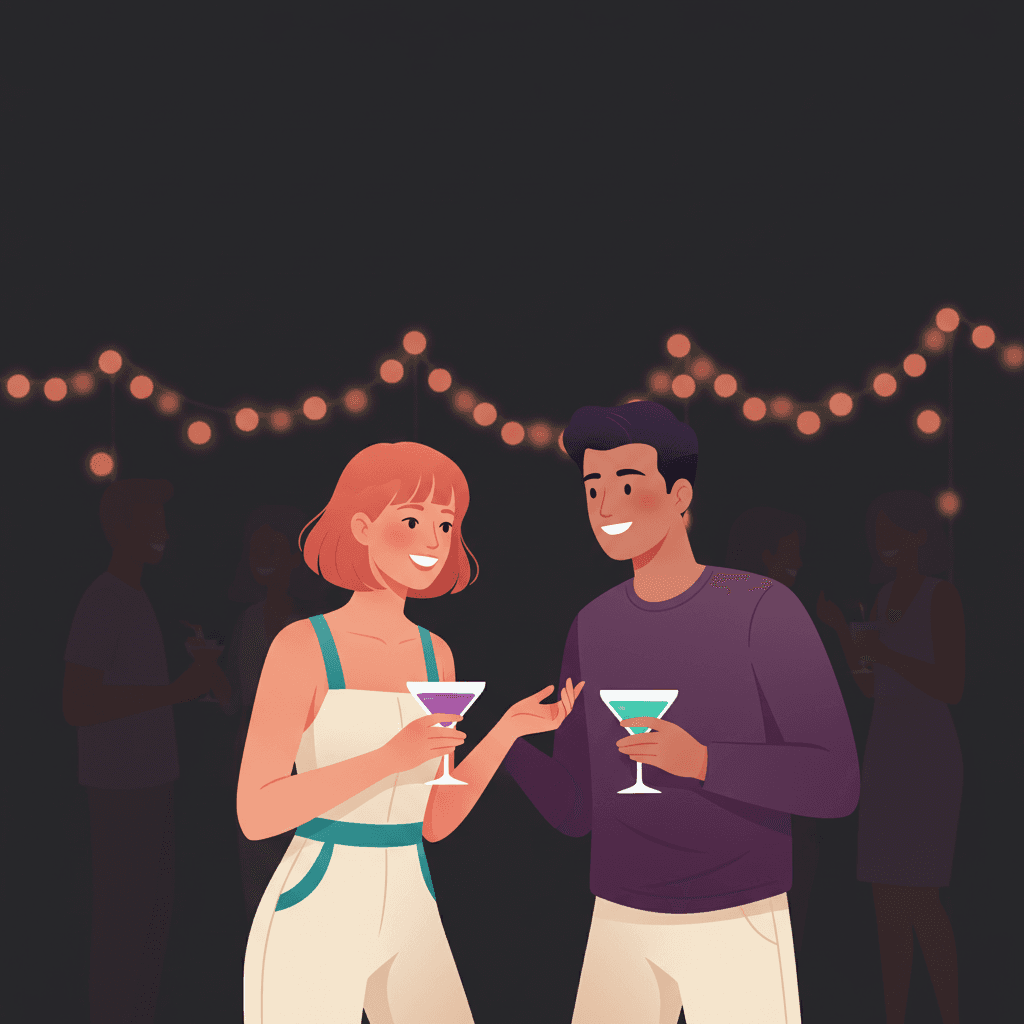
Why 1,000 Messages Can't Replace Five Minutes Face-to-Face
You've texted for weeks and built a connection — then the first date feels like meeting a stranger. Here's why chemistry can't be messaged into existence.
The date had been weeks in the making. You'd texted every morning, shared memes at midnight, learned each other's coffee orders, debated TV shows, and maybe even survived a vulnerable late-night conversation or two. By the time you walked into that bar, you'd clocked hundreds — maybe thousands — of messages.
And then you sat across from each other and felt... nothing. Or worse, awkward silence where the banter used to live.
If this sounds familiar, you're not alone. Across every major dating platform, users are discovering the same unsettling truth: the chemistry you build through text isn't the same chemistry you feel in a room. And for a lot of people right now, that gap is the last straw on their relationship with dating apps altogether.
The Illusion of Knowing Someone Through Text
Messaging is its own performance. When you're typing, you have time to think, revise, land the perfect joke, and present the most articulate version of yourself. Your thumbs can be charming even when your nerves are shot.
Real life doesn't work like that.
In person, chemistry is assembled from a hundred unconscious signals: the way someone laughs when they're actually caught off guard, how they treat the bartender, whether their energy pulls you in or creates a low hum of resistance. These aren't things you can transmit through a screen — not with voice notes, not with video calls, and definitely not with 1,000 carefully crafted texts.
Research on nonverbal communication consistently shows that a significant portion of how we read another person — their trustworthiness, their warmth, their comfort with themselves — comes through tone, body language, and micro-expressions. Text strips all of that away and replaces it with a curated highlight reel.
You're not getting to know someone when you message them for weeks. You're getting to know who they are when they're sitting alone with their phone.
What 1,000 Messages Actually Tell You (And What They Don't)
To be fair, extended messaging before a first date isn't all bad. It filters out obvious incompatibilities. It gives you a rough personality sketch. It can surface dealbreakers early.
But here's what it cannot tell you:
Whether you feel comfortable in their physical presence. Some people give off a warm, calming energy the moment you meet them. Others feel subtly "off" in ways you can't name. You'll feel this within minutes — but messaging for months won't predict it.
Whether the banter translates. Texting humor and in-person timing are completely different skills. The person who had you crying laughing over DMs might go completely flat when jokes need to land in real time, without the safety net of the edit button.
Whether the chemistry is mutual in the moment. Attraction is reactive. It happens (or doesn't) in response to real stimuli — eye contact, laughter, proximity, energy. You can't manufacture it through a messaging app, and the longer you try to build it without meeting, the higher your expectations climb and the harder the fall becomes.
Whether the anxiety fades. For many people, the paradox is that more messaging actually makes the first date more nerve-wracking, not less. The stakes feel enormous because you've emotionally invested in someone you've never actually met. The first date stops being a low-stakes exploration and becomes an audition for something that already feels serious.
The Chemistry Problem: Why Apps Can't Simulate It
Dating apps were designed to solve a real problem: finding compatible people in a sea of strangers. And in theory, the filtering is excellent — by age, location, interests, intentions. But apps were never designed to simulate the experience of being in a room with someone.
The result is a fundamental architecture problem. By the time app users actually meet, they've front-loaded all the getting-to-know-you work that traditionally happened in person. The first conversation happened over text. The first vulnerability happened over voice note. The first joke landed through a meme. And now, sitting across a table, you've run out of first experiences to share — and the real-world version of this person might or might not match who you built in your imagination.
This isn't a Hinge problem or a Bumble problem. It's a foundational mismatch between what apps are optimized for (keeping you engaged on the platform) and what actually creates real romantic chemistry: shared, spontaneous, in-person experience.
What Real-World Encounters Actually Create
When you meet someone at an event — a singles mixer, a rooftop party, a trivia night, a speed dating evening — the dynamic is completely different.
You don't arrive carrying weeks of emotional investment. You arrive curious and open. The conversation has a natural scaffold: you're both there for the same reason, in the same environment, experiencing the same things. There's already a shared "first" — this event, this moment, this particular Thursday.
Icebreakers emerge organically. You both had to navigate the same slightly awkward registration table. You both reached for the last crostini at the same time. You both laughed at the MC's terrible pun. These micro-moments are the actual building blocks of connection, and they're only available in person.
More importantly, you get real data immediately. Within the first five minutes of talking to someone at an event, you know more about your actual chemistry with them than you'd learn in a week of texting. Either the energy is there or it isn't. Either the conversation flows or it doesn't. Either you find yourself leaning in or you're looking for an excuse to grab a fresh drink.
That might sound harsh. But it's actually liberating. You stop auditing your word choices and start paying attention to how you feel.
The First-Date Anxiety Paradox
One of the most quietly common experiences in dating right now is what might be called first-date anxiety after excessive messaging — the experience of feeling more nervous, not less, when you finally meet someone you've been texting for a long time.
It makes psychological sense. The longer the buildup, the more you've imagined who this person is. Your brain has filled in every gap with favorable assumptions. The real person walking toward you has to compete with a fantasy version of themselves that was built on your best projections.
Events sidestep this entirely. When you meet in person from the start, there's no pedestal to fall off of. You're just two people at a party. The stakes are refreshingly human.
And for first-timers especially — people who feel nervous about showing up solo to a singles event — the group context actually works as a pressure valve. You don't have to sustain a one-on-one conversation for two hours straight. You can circulate, recover, re-engage. You're allowed to be a little awkward because everyone there is a little awkward. That shared vulnerability is the fastest shortcut to feeling comfortable with strangers.
How Events Change the Equation
The practical advantages of meeting people at events aren't just about chemistry. They're structural.
Shared context creates natural icebreakers. You don't have to invent a reason to talk to someone. You're already at the same place, on the same night, for a reason that's at least loosely similar.
The environment does some of the social work for you. A good event — with music, activities, or a host keeping energy up — takes pressure off any individual conversation. You don't have to be the entertainment.
RSVP commitment reduces half-hearted engagement. When someone signed up for an event, they've demonstrated actual investment. Compare that to a match who agreed to "grab drinks sometime" and then went silent for a week.
You can meet multiple people in one evening. Speed dating formats and free-flow mixers mean you're not betting everything on one connection going perfectly. You're playing odds that actually work in your favor.
The stories are better. "We met at a rooftop party in April" is infinitely more interesting than "we matched on an app and texted for three weeks."
Apps like Hooked are building on this insight — connecting you with other attendees at real events so you can discover who's going to be in the room before you walk in, and start conversations that continue face-to-face. It's a fundamentally different paradigm than swiping on profiles.
Making the First Move in Real Life: Tips for Showing Up Solo
For many people, the thought of going to a singles event alone feels more intimidating than texting a stranger. It shouldn't — but the feeling is real, and it's worth addressing directly.
Arrive with a small goal, not a big outcome. Don't go hoping to meet your future partner. Go hoping to have one interesting conversation. That's it. One conversation. The bar is low, and it's almost impossible not to clear it.
Give yourself 45 minutes before you evaluate. The first 20 minutes of any social event are the hardest. Everyone is still finding their footing, the room hasn't warmed up, and people are clustered in early-arrival awkward pockets. Give it time. The energy always shifts.
Station yourself near the action, not the walls. The bar, the appetizer table, the activity station — wherever there's movement, there's natural reason to make eye contact and say something. Walls are for people who don't want to be approached.
Have one conversation opener ready. You don't need to be witty. "How do you know about this event?" or "Is this your first time here?" works perfectly. People love being asked genuine questions.
Remember that everyone is rooting for you. At a singles event, everyone showed up for the same reason. Nobody is judging you for trying. Most people are too focused on their own nerves to scrutinize yours.
Spring Is Calling: The Best Events to Try This Season
If you've been meaning to put yourself out there but waiting for the right moment, spring is it. The social calendar is waking up, outdoor venues are opening, and there's a collective cultural energy around fresh starts that makes people more open, more hopeful, and — honestly — more fun to talk to.
Look for:
- Rooftop mixers: The golden hour backdrop does half the work for you. Everyone looks better, the drinks feel festive, and the open sky keeps the energy light.
- Speed dating evenings: The structured format removes all ambiguity about why you're there. It's efficient, low-stakes per conversation, and genuinely entertaining.
- Activity-based events: Trivia nights, cooking classes, wine tastings — anything with a task built in is social gold. The activity is the icebreaker, and friendly competition is a surprisingly effective bonding tool.
- Outdoor festivals and markets: Not always explicitly singles events, but high-density, open environments where striking up a conversation is completely normal.
- Community sports leagues: Volleyball, kickball, bowling — structured ongoing contact with a consistent group of people is one of the most underrated ways to meet someone organically.
The point isn't the specific format. The point is being somewhere with other humans, without a screen between you.
The Bottom Line
If your dating life has started to feel like a full-time communication job — maintaining matches, managing message chains, scheduling calls that feel like HR screening rounds before the actual date — it might be time to question whether the medium is working for you.
Chemistry isn't something you build in a chat window. It's something that either exists in a room or it doesn't, and the only way to find out is to be in the room.
This spring, consider spending less time texting and more time showing up. The best first impression you can make is the one you make in person — unedited, unfiltered, and genuinely present.
That's where the real connections are.
Hooked connects you with other attendees at real events so you can discover who's in the room before the night begins. Download the app and see what's happening near you.
Related Articles
How to Meet Someone at a Wedding: A Single's Guide
Wedding season is prime time for singles. Learn how to meet someone at a wedding with practical, no-cringe tips for the cocktail hour, dance floor, and beyond.
Single at a Wedding? How to Actually Meet Someone
Being single at a summer wedding is a hidden dating goldmine. Learn how to meet someone, spark real connection, and turn a wedding moment into something more.
How to Meet Someone at a Wedding When You're Single
Flying solo to a wedding this season? Here's how to enjoy the night, meet people naturally, and maybe leave with more than cake — no awkwardness required.