
Why Spring Is the Best Time to Ditch Dating Apps for Real Events
Spring is the perfect excuse to close your dating apps and start actually meeting people. Here's why event-based dating outperforms swiping every time.
Spring has a way of exposing every lie you've been telling yourself. That you need another month to finalize your dating profile photos. That your match from February is "just busy." That this app — the one you've been on for three years — is "definitely going to work out."
Spoiler: it isn't. But spring, with its rooftop bars and patio brunches and everyone inexplicably wanting to go outside, gives you an out. Here's why ditching the apps and showing up to real events this spring is the dating reset you've been putting off since, conservatively, 2022.
Your Dating App Profile Is a Work of Fiction (And So Is Everyone Else's)
Here's a fun game: take any dating profile and count how many things you genuinely cannot verify. The career? Maybe. The "active lifestyle"? Those hiking photos are from 2019. The claim that they're "looking for something real"? Statistically dubious.
Dating apps are essentially mood boards people build to represent the best, most curated, most carefully filtered version of themselves. Which is completely understandable — you'd do the same. The problem is you end up matching with someone's marketing team, not the actual human being.
Events flip this entirely. When you show up to a singles mixer, a trivia night, or a rooftop happy hour, you're watching real behavior in real time. Does your potential match talk to the bartender like a person? Are they glued to their phone the moment conversation pauses? Do they laugh at the same ridiculous moment you do? These are things you cannot fake on a profile and cannot discover through text messages that take two days to arrive.
The shift from curated profile to observable human is genuinely clarifying. Most people who try event-based dating report that they learn more about someone in 20 minutes of real-world conversation than in three weeks of app messaging. That tracks.
The App Conversation Treadmill Is Exhausting (And You Know It)
You know the cycle. Match. Open. "Hey." Wait. "Hey back." "How's your week going?" "Good, busy lol. You?" And then... nothing. Or it continues for three weeks until you realize you've been texting someone you've never met long enough to have a relationship with them, without actually having a relationship with them.
The average dating app conversation that makes it to an actual date takes somewhere between several days and several weeks of messaging. That's a significant emotional investment in someone you haven't screened in person yet. After doing this enough times, the interactions start to feel mechanical — like you're running the same script over and over with different profile photos at the top.
Events short-circuit this entirely. You talk to someone for twenty minutes at a wine and paint night, you find out if there's actual chemistry, and you either exchange numbers or you don't. Clean, efficient, and genuinely enjoyable because you're doing something fun in either scenario.
No more watching three dots appear and disappear for six minutes only to produce "haha yeah."
Spring Events Hit Different — No, Really
The seasonality here isn't incidental. Spring changes the social calculus in ways that genuinely benefit people who are trying to meet someone.
People are in better moods. There's real psychology behind this — more daylight, warmer temperatures, and the collective relief of being done with winter. People at spring events are more open, more talkative, and more willing to laugh at themselves. The energy is fundamentally different from a January indoor mixer where everyone looks like they're waiting for their car to warm up.
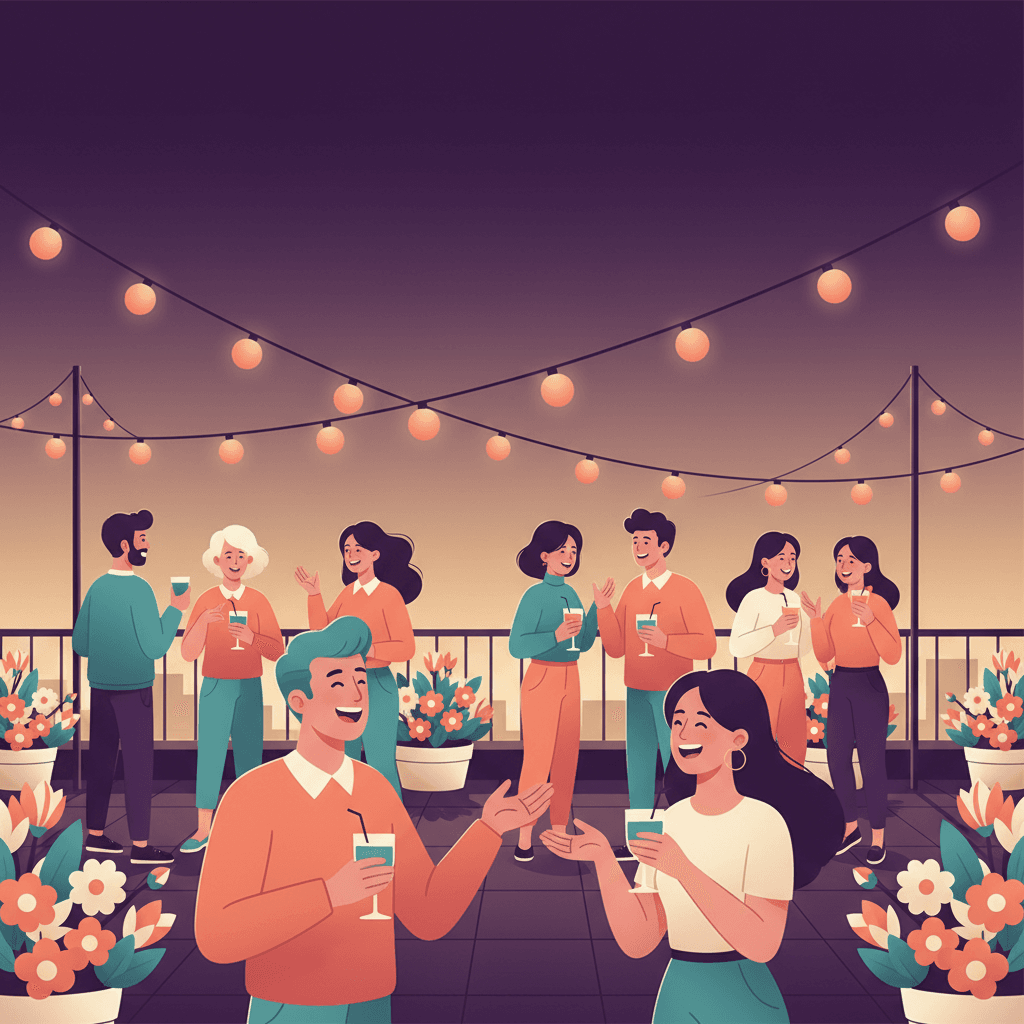
The venues are better. Rooftop bars, outdoor patios, parks, and beer gardens create natural conversation starters. "I love this view" is objectively more useful as an opener than "what are you looking for on here?" Being outside gives people a natural escape valve — they don't feel trapped the way they might in a cramped indoor space — which, counterintuitively, makes them more willing to linger.
There are more events. Spring social season ramps up significantly starting in March. March Madness watch parties, outdoor brunches, pop-up markets, festival season kickoffs, rooftop happy hours that couldn't exist three weeks ago — the sheer volume of options means more opportunities and more variety in what those opportunities look like.
There's a built-in energy shift. People who spent winter swiping with low expectations arrive at spring events with the vague hope that something different is possible. That hope is contagious. It makes interactions warmer, conversations more genuine, and willingness to follow up after the event significantly higher.
Safety Is Built Into the Format
Here's something that doesn't get discussed enough: first dates from apps require a leap of faith that's genuinely a lot to ask of someone.
You're meeting a stranger, alone, usually at a bar or coffee shop, with no prior social context, no mutual accountability, and no one around who knows either of you. For many people — particularly women — this is a real friction point that makes them more hesitant to convert matches to dates in the first place. The apps have added verification features and share-your-location tools, but these are bolt-ons to a structure that was never designed with safety as a default.
Events don't have this problem. They're inherently public, they're group settings, and there's usually an organizer who has some investment in the experience going well. The structure creates a social safety net that isolated one-on-one meetups simply can't replicate. You get to meet someone in a low-stakes environment where neither party has made a major emotional commitment yet, and where if things go sideways there are approximately thirty other people to talk to.
The accountability that comes with a shared social context is a feature, not a side effect.
Events Filter for Intent — Apps Don't
One of the more quietly maddening things about mainstream dating apps is the fundamental mismatch in relationship intent you encounter constantly. You can match with someone looking for something casual, someone looking for something serious, and someone genuinely unsure in the same swipe session. The apps have tried to address this with filters and prompts and little badges, but intent is slippery when the platform incentivizes everyone to stay active and visible regardless of where they're at.
Events don't have this problem in the same way. A "singles in your 30s" event attracts a meaningfully different crowd than a hookup bar on a Saturday night. A structured speed dating event self-selects for people who are willing to put in real effort. A professional networking mixer draws people who take their social lives seriously enough to actually show up.
When you attend an event organized around genuine connection, you've already done a form of pre-filtering that no algorithm can replicate, because it requires something the app cannot demand: physical presence and real-world follow-through.
The Introvert Argument for Events (More Counterintuitive Than It Sounds)
Here's the thing that surprises most people: events are often easier for introverts than one-on-one first dates.
The pressure of a standard first date — two people, staring at each other across a table, expected to perform charm and authenticity for ninety minutes — is genuinely intense. It's a format that advantages extroverts by design. Events distribute that pressure. There's an activity to anchor the interaction, there are other people to observe and occasionally loop into the conversation, and the social burden isn't entirely on two people to manufacture chemistry from scratch.
Introverts who struggle with cold initiation often find it significantly easier to enter a conversation when there's a shared context to reference — the game that's playing, the live music, the art on the wall, the truly ambitious charcuterie board that arrived at the wrong table. It's not a social hack; it's just how human connection naturally works when you're not forcing it through a phone screen.
The irony is that apps were supposed to make dating easier for shy people, and for many they've done the opposite: replaced the warm context of a shared experience with the cold pressure of an audience of one.
How to Actually Make the Most of Spring Events
A few things that separate people who consistently meet someone interesting at events from people who go once and declare it "not for them":
Show up with a mindset, not an agenda. The goal isn't to leave with a phone number. It's to have genuinely interesting conversations. Phone numbers are a byproduct of that, not the target. People can smell agenda from across a patio.
Talk to people you're not immediately drawn to. Chemistry develops. First impressions at events are notoriously unreliable because you're catching someone mid-arrival, mid-drink, mid-conversation with someone else. Give it a few minutes.
Don't spend the whole night with your friends. This seems obvious and yet. If you're at a singles event with your best friend, make a pact to separate for at least part of the evening. You're there to meet new people — let the people who already know you have a night off from being your social crutch.
Follow up the same night or the next morning. The post-event window is short. A "great meeting you tonight" message within twelve hours converts dramatically better than one that arrives three days later when the context has faded.
Go more than once. Events have regulars, and regulars have rapport. If you show up to the same rooftop happy hour three consecutive weeks, you're no longer a stranger — you're part of the fabric of the thing. That's where actual connections form.
The Bottom Line
Apps aren't going anywhere. But the seasonal reset that spring offers is a real opportunity to break patterns that clearly aren't working and try something with a better track record for producing actual human connection.
Meeting people in person, at events designed around connection, in the best weather of the year — it's not a radical idea. It's just one that a lot of people have stopped giving themselves permission to try because the default has become swiping from the couch.
Apps like Hooked are built around exactly this model: connecting people through shared events rather than profile browsing, so that chemistry gets tested in real life instead of imagined through text. Worth keeping in mind as you plan your spring social calendar.
You already survived another winter of nothing. You deserve a spring that feels different.
Related Articles
How to Meet Someone at a Wedding: A Single's Guide
Wedding season is prime time for singles. Learn how to meet someone at a wedding with practical, no-cringe tips for the cocktail hour, dance floor, and beyond.
Single at a Wedding? How to Actually Meet Someone
Being single at a summer wedding is a hidden dating goldmine. Learn how to meet someone, spark real connection, and turn a wedding moment into something more.
How to Meet Someone at a Wedding When You're Single
Flying solo to a wedding this season? Here's how to enjoy the night, meet people naturally, and maybe leave with more than cake — no awkwardness required.