
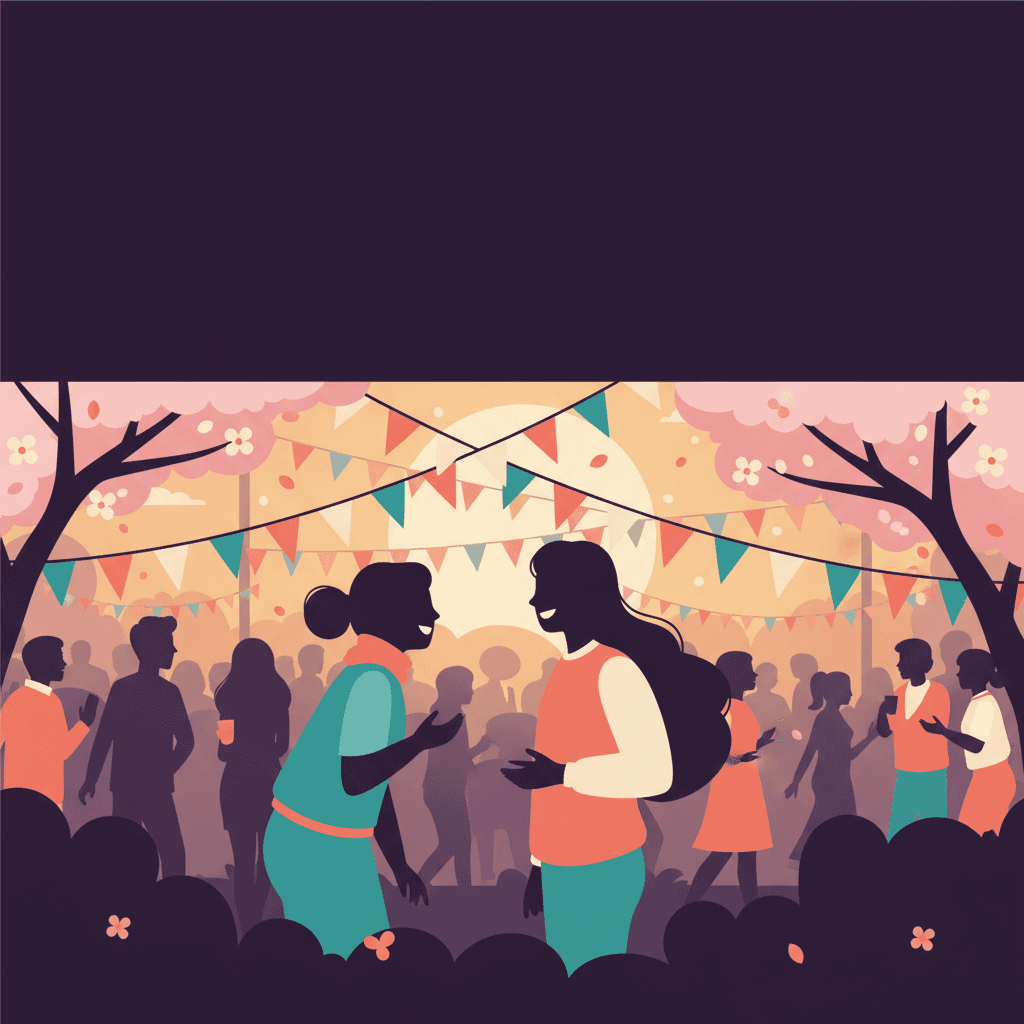
How to Actually Meet People at Spring Events
Festival season is here. Here's the honest, practical guide to meeting people at spring events — from rooftop bars to Coachella weekends.
Spring is the universe's annual reminder that it's time to go outside and talk to humans again. The patio bars are open, the festival lineups are dropping, rooftop season is officially upon us — and yet, every year, millions of people show up to these things, have a great time staring at a stage or their drink, and leave without a single new connection.
It doesn't have to be that way.
Meeting people at events isn't some rare social superpower. It's a skill, and like any skill, it gets way easier once you understand the actual mechanics. Whether you're heading to a Coachella weekend, a rooftop bar takeover, or a local March Madness watch party, this guide is your playbook for turning a good night into a genuinely memorable one — and maybe meeting someone worth texting.
Why Spring Events Are the Perfect Time to Meet People
There's something chemically different about spring social gatherings. The energy is higher, people are more open, and there's a collective "we've been inside for way too long" spirit that lowers social walls in a way that the holiday season — with all its stress and obligation — simply doesn't replicate.
Shared context is everything. When you're standing next to someone at a rooftop bar watching the sunset or in a crowd at an outdoor concert, you already have something in common: you chose this. That's a better opener than 90% of what happens on dating apps.
Research consistently shows that people who meet through shared experiences — events, activities, mutual contexts — form stronger initial impressions and tend to progress faster toward meaningful connections. The "we met at a thing" story is a better foundation than "we matched and texted for three weeks."
The Spring Events That Actually Work
Not all events are equal for meeting people. Here's a quick breakdown:
- Outdoor music festivals: High energy, lots of natural movement between areas, easy to strike up conversations near stages, food stalls, or charging stations
- Rooftop bar openings and pop-ups: More intimate scale, people are there to socialize (not just watch something), natural pauses in activity
- Sports watch parties: Built-in conversation topics, emotional peaks and valleys create bonding moments, everyone's there for the same reason
- Spring singles mixers and networking events: The most explicit "yes, I'm open to meeting people" context you can be in
The Pre-Event Setup That Most People Skip
Before you even walk in the door, there are a few things that dramatically improve your odds of actually connecting with people.
Go With Two People, Not Ten
Large group dynamics are a meeting-people killer. When you roll with eight friends, you spend the whole night talking to the same eight people. Two is the sweet spot — you have a home base, someone to regroup with, and the freedom to split off without abandoning anyone.
The rule: If you go with a group larger than four, agree beforehand that it's okay to wander and reconnect. No one should feel tethered.
Have a Soft Intention, Not a Mission
There's a difference between "I'm going to meet my future partner tonight" (pressure, weird energy, guaranteed disappointment) and "I'm open to an interesting conversation or two" (low stakes, relaxed, genuinely enjoyable).
People can sense desperation and they can sense ease. Walk in like someone who's already having a good time — because you should be, regardless of who you meet.
Dress for the Version of Yourself You Want to Be
This sounds obvious, but the psychological reality is that what you wear changes how you carry yourself. If you feel slightly overdressed, you'll hold your head up. If you feel frumpy or uncomfortable, you'll want to disappear. Wear something you feel like yourself in — not costume, not camouflage.
How to Actually Start Conversations at Events
This is the part everyone wants to skip to. Here it is, honestly and simply.
Use the Environment, Not a Line
The best openers at events aren't clever — they're contextual. You're surrounded by material.
At a music festival:
- "Have you seen them before? I'm debating whether to push to the front."
- "This lineup is either genius or chaotic. I can't decide."
At a rooftop bar:
- "Is this your first time here? The view is doing a lot of heavy lifting for this drink price."
- "Do you know if they do a sunset thing, or is this just… the lighting?"
At a watch party:
- The game is your conversation. Reacting out loud near someone is an opener.
The formula is simple: observation + mild opinion or question. You're not performing. You're just being a person in the room.
The Three-Minute Window
Most people give themselves about 30 seconds to decide whether to approach someone, and then spend the next 10 minutes talking themselves out of it. By then the moment has passed, the person has moved, and you've manufactured a rejection that never happened.
Give yourself a three-minute window after noticing someone you'd like to talk to. If you're still in proximity in three minutes, that's your sign to say something. Doesn't matter what — just something real.
Proximity is a Signal
If someone keeps ending up near you at a crowded event, that's rarely an accident. People vote with their feet. If you notice the same person at the bar when you go back for a second drink, near you during a set, in the same general zone of the rooftop — that's permission to open a conversation.
How to Keep a Conversation Going (And Know When to Move On)
Starting is easy compared to the art of keeping things interesting without it turning into an interview.
Ask Questions That Have Actual Answers
"What do you do?" is a functional question but a terrible conversation starter. People give you their job title and wait.
Try instead:
- "What's the best event you've been to this year?"
- "Are you a 'festival person' or did someone drag you here?"
- "What's the last thing you were genuinely excited about?"
These have stories attached. Stories lead to actual conversations.
The Listen-Back Loop
When someone answers a question, your job is not to immediately ask another one — that's an interview. Instead: listen for one thing in their answer that you actually find interesting, and respond to that. Then maybe ask a follow-up if it's natural.
This creates a loop that feels like a real conversation instead of a vibe check.
Exiting Gracefully Is a Skill
The ability to exit a conversation well is just as important as starting one. You don't owe anyone your whole evening — and a clean exit keeps the door open.
"I'm going to go find my friend, but it was genuinely great meeting you" is the whole move. Say it like you mean it (because you should mean it). If you want to exchange contact info, do it before the exit — not as part of it.
"Hey, I'd love to keep in touch — can I grab your number?" is straightforward and works. Most people respect directness far more than elaborate maneuvering.
The Biggest Mistakes People Make at Spring Events
Let's call some things out, because awareness is the first step.
Being on Your Phone
Your phone is a social force field. When you're looking at it, you are broadcasting "do not approach." If you're nervous and defaulting to scrolling, try putting it in your pocket for 20-minute stretches. You'll be surprised how much more present — and approachable — you feel.
Only Talking to People in Your Target "Type"
Events are an opportunity to have conversations with interesting people. Some of them might be dating prospects. Some might be future friends, collaborators, or just someone who made a Tuesday night better. Keep the aperture wide — you can't predict where connection comes from.
Waiting for the "Right Moment"
The right moment is the one you're in. The crowd won't thin out enough, the music won't get quieter, the person won't turn around at a more convenient angle. Conditions will never be ideal. Just go.
Leaving Without Following Through
You had a great conversation with someone. The night's winding down. And then... you just drift away, hope you'll see each other around, and leave it to fate.
Fate is famously bad at follow-through.
If you want to see someone again, say so before you leave. It takes about four seconds of mild vulnerability and the payoff is obvious.
Using Technology to Your Advantage (Without Being Weird About It)
Apps get a bad reputation at live events — mostly because people use them as a substitute for actually being present. But there's a smarter way to use them.
If you're at an organized singles event or mixer, platforms like Hooked let you discover and connect with other attendees before you even walk in the door — so you're not starting from zero when you arrive. That pre-event context changes the dynamic entirely. You're not a stranger; you're someone they've already noticed.
The key is using tech to enhance the real-world interaction, not replace it. The best conversations still happen face-to-face, with good lighting and a decent drink in hand.
Making the Most of Festival Season Specifically
Coachella weekends and outdoor music festivals come with their own social ecosystem. Here's what's different:
Multi-day events are a superpower. If you see someone on day one and don't approach, day two is a gift. "Hey, I saw you yesterday near the [stage]" is a completely natural opener and you've already broken the stranger barrier.
The logistical chat is an opener. "Do you know what time [band] goes on?" "Have you been to this area before, where's the best spot to watch from?" These work because they're useful, not performative.
Shared discomfort builds bonds fast. Standing in a long line together, getting rained on, navigating a confusing festival map — shared mild suffering is one of the fastest intimacy builders humans have. Lean into it.
After-parties and wind-down spots are where it actually happens. The main stage is loud and crowded and hard to have a real conversation. The bar at 11pm, the pizza place near the exit, the chill-out area — that's where the actual connections get made.
What to Do After the Event
You met some people. Maybe you exchanged numbers. Now what?
Follow up within 24-48 hours. The longer you wait, the more momentum dissipates. A simple "hey, great meeting you at [event] — hope the rest of your weekend was good" is enough.
Reference something specific. "The conversation about [thing you talked about]" shows you were actually listening, not just collecting numbers.
Suggest something concrete if you're interested. "There's actually another [type of event] happening next weekend — would you want to check it out?" is a low-pressure next step that builds on the shared-event context you already have.
The Real Point
Meeting people at spring events isn't about running some optimized social playbook. It's about showing up, being present, and giving yourself permission to be the kind of person who talks to strangers.
The conditions are already good. The weather is warm, the energy is up, and everyone around you has chosen to be out in the world. All you have to do is participate.
Spring only comes once a year. Use it.
Related Articles
How to Meet Someone at a Wedding: A Single's Guide
Wedding season is prime time for singles. Learn how to meet someone at a wedding with practical, no-cringe tips for the cocktail hour, dance floor, and beyond.
Single at a Wedding? How to Actually Meet Someone
Being single at a summer wedding is a hidden dating goldmine. Learn how to meet someone, spark real connection, and turn a wedding moment into something more.
How to Meet Someone at a Wedding When You're Single
Flying solo to a wedding this season? Here's how to enjoy the night, meet people naturally, and maybe leave with more than cake — no awkwardness required.