
The Complete Guide to Hosting a Singles Night
Everything you need to plan and host a successful singles night — from venue selection and guest management to activities and follow-up.
Here's a stat that should make you pay attention: more people than ever are tired of dating apps, and they're willing to pay someone to put them in a room with other single people. That someone could be you.
Singles nights are having a massive moment. Venues are selling out. Waiting lists are growing. Event organizers who figured this out early are building real businesses around something beautifully simple: giving people a place to meet each other in person.
But — and this is the important part — there is a huge gap between a singles night that people rave about and one that people quietly leave early. The difference isn't budget or location or even the crowd. It's the details. And the details are what this guide is about.
Step Zero: Decide What Kind of Night This Is
Before you book a venue or design a flyer, you need to answer one question: what does this feel like?
Because "singles night" is about as specific as "food." It could mean anything:
- The classic mixer — a nice bar, good music, come-as-you-are. Low logistics, high chill.
- Activity-based — cooking class, trivia, art night. More setup, but deeper connections.
- Themed party — costumes, decades, color codes. Instagram-worthy, skews younger.
- The upscale social — curated guest list, craft cocktails, somewhere photogenic. Premium pricing.
- Speed dating — timed rounds, structured rotation. Efficient, but can feel like interviewing.
Pick one. Don't try to be all of them. Your format dictates everything else — the venue, the price point, the marketing, the vibe of the night. Get this decision right and the rest flows. Get it wrong and you'll spend the whole night trying to fix something that was broken from the start.
The Venue Is the Vibe
I've seen great events in average venues and mediocre events in gorgeous venues. But I've never seen a great event in a wrong venue. The space has to match the night you're creating.
Size matters, but not the way you think. You want the room to feel full. Not packed, not half-empty — full. If you're expecting 80 people, book a space for 100-120. An energized room where bodies are close enough to naturally start conversations. Nothing kills a singles night faster than a cavernous room with clusters of people ten feet apart.
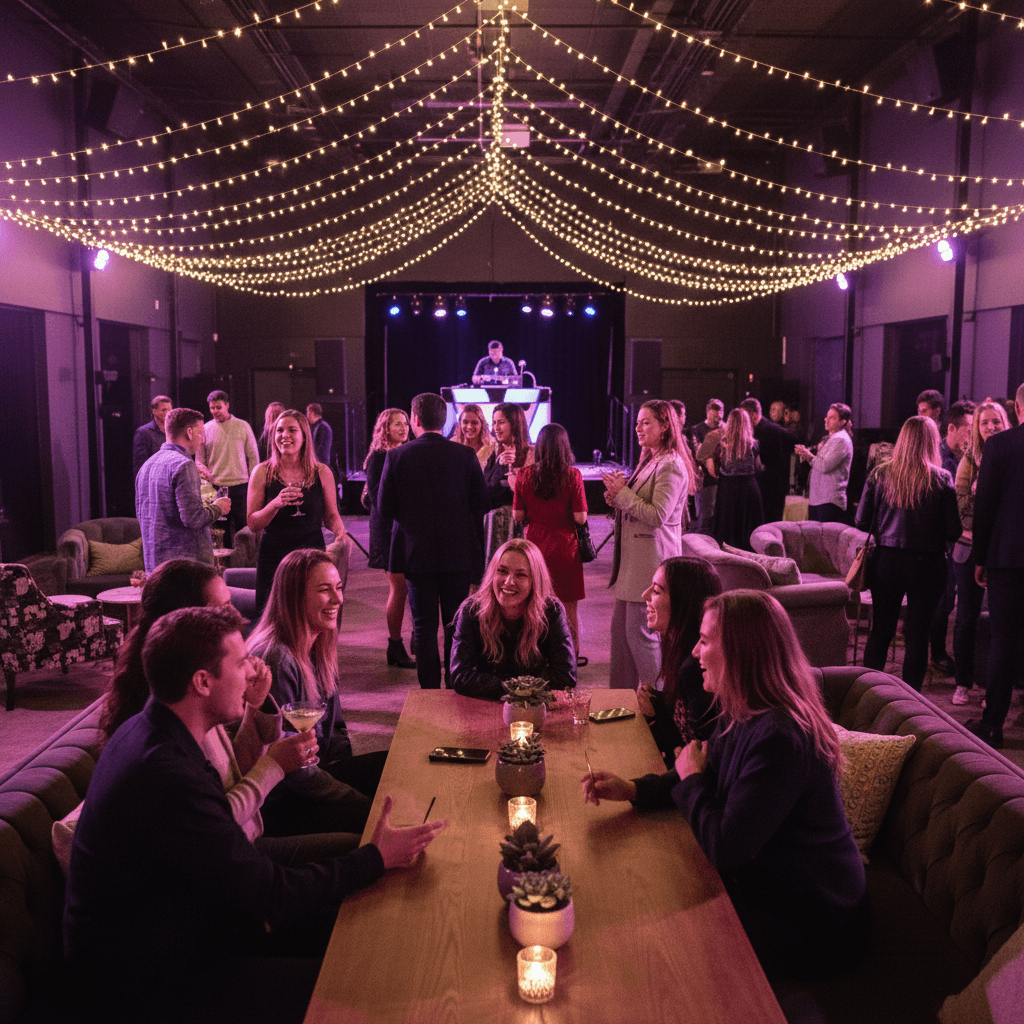
Lighting is doing more work than you realize. Dim enough to feel atmospheric. Bright enough to actually see faces. Warm tones — absolutely no fluorescents, no harsh overhead lights. If the venue has candles, use them. If it doesn't, bring your own. This isn't optional. Bad lighting is the silent killer of social events.
Music is the invisible host. You need it, but people also need to hear each other. A DJ playing at conversation-level volume is ideal. If you can't shout your question to the bartender and whisper to the person next to you, the levels are wrong. Test this before the event.
Location is logistics. Central, transit-accessible, near parking. Boring to think about, critical to attendance. Every extra ten minutes of commute costs you a handful of no-shows. Math doesn't care about your aesthetic.
The Gender Ratio Problem (And How to Solve It)
Let's talk about the elephant in the room. Bad gender balance kills singles events faster than anything else. A room that's 70% one gender creates awkward dynamics that no amount of good music can fix.
Here's how you stay ahead of it:
- Separate registration links. Track sign-ups by gender in real time.
- Cap the faster-filling side. When one hits capacity, close it or start a waitlist.
- Charge for tickets. Even $15-20 dramatically improves show-up rates. Free events have 20-30% no-show rates. Paid events? More like 10-15%. The modest ticket price isn't about revenue — it's about commitment.
- Over-invite by 20-30%. Not everyone shows. Factor that in from the beginning.
The First Ten Minutes Make or Break the Night
Think about what it feels like to walk into a room full of strangers. Your heart rate spikes. You scan for anyone you know. You don't find anyone. You consider leaving.
That moment — right there — is where you either win or lose your guest. The first ten minutes are everything.
Check-in should be thirty seconds, max. No fiddling with lists, no confusion at the door. Fast, warm, and done. Name tags are optional, but if you use them, first names only — no one wants to feel like they're at a conference.
Put a drink in their hand immediately. A welcome drink — even just a glass of something bubbly — settles nerves and gives people something to do with their hands. The psychological impact is enormous.
Have people circulating. Not "bouncers." Not "staff." Friendly, social humans whose entire job is to say "Hey, welcome! Have you met anyone yet? Come, let me introduce you." Two or three of these people can transform the energy of the entire room. This is the single best investment you can make for your event.
Light Structure, Not a Drill Sergeant
Here's the tightrope: people need help connecting, especially in the first thirty minutes. But nobody wants to feel like they're being managed. The goal is to lower the barrier to conversation without making it feel forced.
Conversation prompt cards on tables. Simple, optional, always there if someone needs a lifeline. "What's the best trip you've ever taken?" is better than staring at your phone.
One group activity early on. Two truths and a lie. Human bingo. Something short and silly that gets people laughing and talking. Five minutes, then done. Don't overdo it.
An MC who sets the tone. A quick welcome: "Hey everyone, glad you're here. The point of tonight is to have fun and meet people. Don't take it too seriously. The bar's open. Go say hi to someone you haven't met." That's it. Thirty seconds. No lengthy speeches.
Then let it breathe. After the first thirty minutes, people have found their groove. Your job shifts from facilitator to invisible.
Don't Let It Fizzle
The last thirty minutes matter as much as the first. An event that slowly empties out leaves people with a deflating feeling, even if the first two hours were great. End on a high.
- "Last chance" energy. Have the MC or DJ drop a hint: "We're wrapping up soon — if there's someone you've been meaning to talk to, now's the time."
- Close with crowd favorites. The DJ plays the songs everyone knows. Energy goes up, not down.
- Promote the next event. While people are still buzzing. Not in an email tomorrow — right now, in the room, while the feeling is fresh.
Marketing: Sell the Night, Not the Desperation
This is where most organizers get it wrong. They market the dating part. Big mistake.
Nobody wants to admit they're going to a singles event. What they will admit is going to a fun night out that happens to attract single people. See the difference?
Good: "A night of great cocktails, rooftop views, and new faces at [venue]." Bad: "Tired of being single? Find your match at our event!"
The first one sounds like a cool party. The second one sounds like an infomercial for loneliness. Guess which one people share with their friends?
Where to promote it:
- Instagram — visual, shareable, event-friendly. Your best channel by far.
- Word of mouth — incentivize people to bring friends. "Bring a friend, get a free drink" works wonders.
- Local Facebook groups — community-based reach that's surprisingly effective.
- Eventbrite or Meetup — helps new people discover you.
- One micro-influencer — a single well-placed Instagram story from the right local account can sell out your event overnight.
- Your email list — for repeat events, this becomes your most valuable asset.
Show the vibe, not the pitch. Post photos and short videos from past events. Let people see what the night feels like. That's worth more than any copy you could write.
The Day Of
Your team for a 100-person event:
- 1 host/MC (the face of the night)
- 2-3 social connectors (the secret weapon — people who circulate and introduce guests)
- Bar staff (venue-provided)
- 1 person on check-in
- 1 photographer (optional but invaluable for marketing your next event)
The timeline:
- 7:00 PM — Doors open. Welcome drinks. Music starts low.
- 7:00–7:30 — Arrivals, casual settling in. Social connectors are working the room.
- 7:30–7:45 — Quick MC welcome. One light icebreaker activity.
- 7:45–9:15 — Main event window. Free mingle, music up slightly, energy building.
- 9:15–9:30 — "Last chance" announcement. Next event promo. DJ plays bangers.
- 9:30 — Official end.
- 9:30–10:00 — Organic hangout for those who want to stay. (They will.)
The Morning After (Follow-Up)
The event doesn't end when the lights come on. What you do in the next 24 hours determines whether this was a one-off or the start of a series.
- Thank-you message with photos. Send it the next day. People will screenshot their favorites and share them. Free marketing.
- Match results (if you're using any kind of matching system). Strike while the iron is hot.
- Short feedback survey. Three questions max. "What did you love? What would you change? Would you come again?" Keep it fast.
- Early-bird for the next event. Discount code, limited spots, a reason to commit while they're still riding the high.
- Post the photos on socials. (With permission.) Build FOMO for anyone who didn't come. They'll be at the next one.
The Mistakes That Kill Events
- No structure. People stand around waiting for something to happen. Nothing does.
- Too much structure. It feels like corporate team-building. People leave.
- Wrong music. Too loud, wrong genre, bad energy. Music is the heartbeat of the event.
- Gender imbalance. Ignored until it's too late. Always manage this proactively.
- No follow-up. You had a great night and then... nothing. Momentum dies.
- Overpromising. "Find the love of your life tonight!" No. Just no. Under-promise. Over-deliver. Always.
Go Do It
A great singles night isn't complicated. It's a good room, the right music, a balanced crowd, a little bit of structure, and a lot of letting human nature do its thing.
People want to connect. They always have. What's changed is that they're no longer willing to do it through a screen. They want to be in a room, with music playing, feeling something real.
All they need is someone to create that room. Your first event doesn't need to be perfect — it just needs to happen. Start small. Learn fast. Pay attention to what works. The demand is real, and it's growing.
The only question is whether you'll be the one to meet it.
Related Articles

Why Your Next Match Won't Come From an App
Swipe fatigue is real. In 2026, singles are deleting dating apps and meeting people at events instead. Here's the data behind the biggest shift in modern dating.

10 Dating Event Ideas That Actually Work
From themed singles nights to activity-based mixers, here are 10 dating event formats that consistently lead to real connections.