
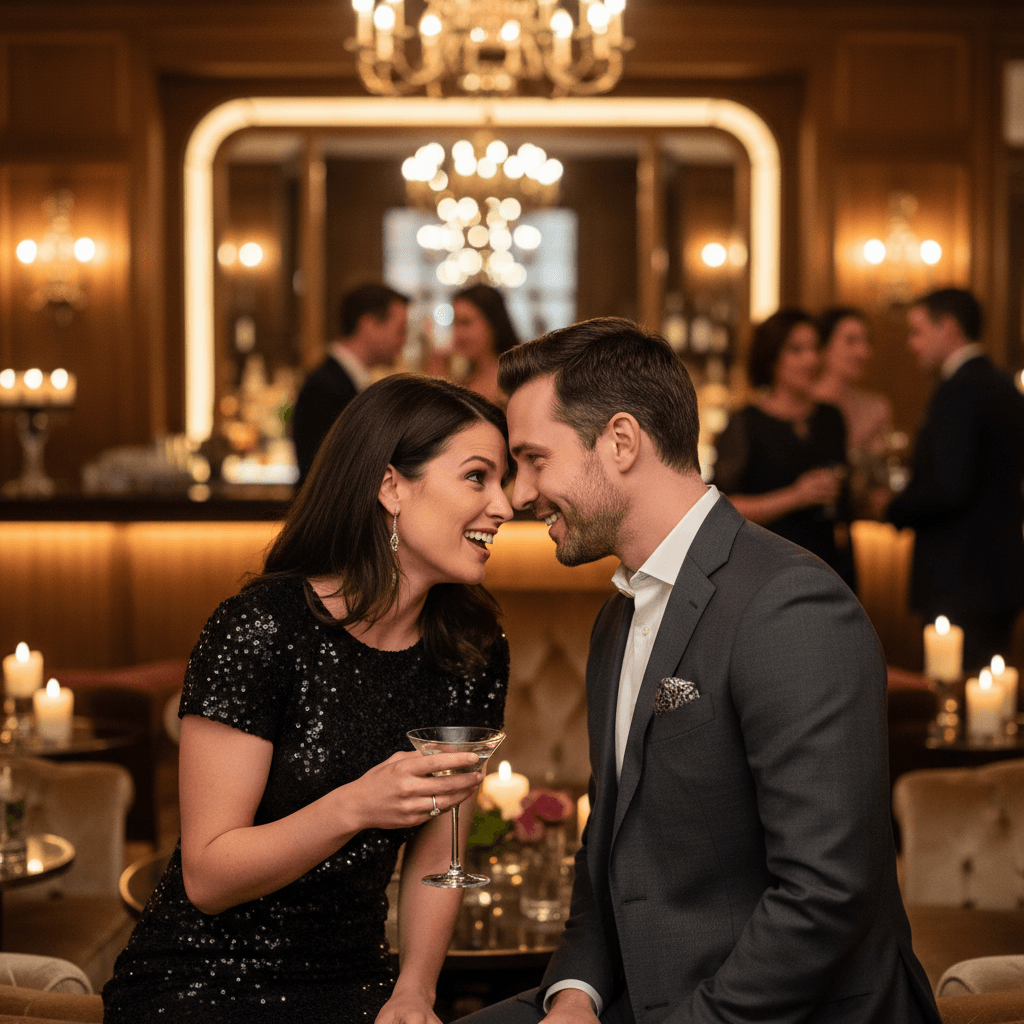
7 Conversation Openers That Actually Work When You Meet Someone at an Event
Most people freeze when they see someone attractive at an event. Here are 7 psychology-backed openers that turn 'I should have said something' into a real conversation.
You see them across the room. They're laughing with a friend, drink in hand, and something about them just pulls your attention. Your brain says go talk to them. Your body says absolutely not.
This isn't a confidence problem. It's a preparation problem. Nobody taught you what to actually say in that moment, so your brain fills the void with worst-case scenarios and you end up standing by the bar pretending to check your phone.
Here's the good news: talking to someone at an event is fundamentally easier than any other context. You already have something in common — you're both there.
Why Event Conversations Are Different
Approaching a stranger on the street or sending a cold DM requires you to justify your existence in their world. At an event, that justification is already handled. You're both attendees. You're both part of the same moment. Social norms actually encourage you to talk to each other.
This shared context is what psychologists call situational common ground, and it's the single most powerful conversation lubricant that exists. You don't need to be witty. You don't need a rehearsed line. You just need to acknowledge the thing you're both experiencing.
The Ping-Pong Principle
Before we get to specific openers, here's the one rule that matters more than any line: good conversations flow like ping-pong, not like a speech.
You say something. They respond. You respond to their response. Back and forth. The goal of an opener isn't to impress — it's to start a volley. The best openers are the ones that make it easy for the other person to hit the ball back.
Keep this in mind as you read the seven openers below. They're all designed to invite a response, not demand one.
The 7 Openers
1. The Shared Experience Opener
"What made you decide to come to this tonight?"
Simple, warm, and genuinely curious. This works at literally any event because it asks about their decision-making, which people love talking about. It also immediately tells you something real about them — are they adventurous, social, new in town?
2. The Observation Opener
"I've been trying to figure out if the DJ is playing a genre or just vibing randomly — what do you think?"
Make a light observation about the event and invite their opinion. This works because it's low-pressure and slightly playful. You're not asking them to reveal anything personal — you're asking them to be a co-observer with you.
Swap in whatever fits: the venue, the food, the crowd energy, the decor. The specific observation matters less than the invitation to share a perspective.
3. The Compliment-Plus Opener
"That's a great jacket — is there a story behind it?"
A compliment alone is a dead end. "Nice shoes." "Thanks." Silence. But a compliment followed by a question creates momentum. The "story behind it" framing works because it gives them something to actually talk about, and most people have at least a small story about things they chose to wear.
4. The Friendly Recommendation Opener
"Have you tried the [specific drink/food]? I just had it and I'm either in love or making a terrible mistake."
This one works beautifully at events with food or drinks. It's casual, self-deprecating, and naturally leads to a shared experience ("Oh, you should try it" or "I had it too, it's amazing").
5. The Honest Opener
"I'm going to be honest — I almost didn't come tonight, and now I'm really glad I did. How are you finding it?"
Vulnerability is disarming in the best way. Admitting you almost didn't show up is relatable (who hasn't felt that pre-event hesitation?), and it signals that you're genuine rather than performative. The follow-up question passes the conversation to them naturally.
6. The Context Bridge Opener
"Do you know anyone here, or are you doing the brave solo thing too?"
This one is brilliant for two reasons. First, it immediately establishes common ground if they're also there alone. Second, even if they're with friends, it opens the door to them introducing you — which is actually an even better outcome.
7. The Activity Opener
"I feel like everyone here is way better at [dancing/mingling/looking relaxed] than me. Any tips?"
Self-deprecating humor combined with a request for help. People love giving advice, and this opener puts them in the expert role, which makes them feel good. It's also inherently playful, which sets the right tone.
Reading the Room: Green, Yellow, and Red Lights
Once you've opened, pay attention to what comes back:
Green lights — They turn their body toward you. They ask you a question in return. They laugh. They maintain eye contact. Keep going.
Yellow lights — Short answers but friendly tone. They might be shy, distracted, or warming up. Give it one or two more volleys before deciding.
Red lights — One-word answers. No eye contact. Body turning away. Phone comes out. Headphones go in. These aren't personal rejections — they're just signals that this person isn't available for conversation right now. Smile, say "enjoy your night," and move on with grace.
The Follow-Through
Here's where most people fumble. The conversation went well. You both laughed. There was a vibe. And then... you just walk away and spend the rest of the night kicking yourself.
The follow-through doesn't have to be smooth. It just has to happen:
- At events with a matching app (like Hooked), the follow-through is built in. If you both felt it, you'll match. No awkward number exchange needed.
- Without an app, try: "This has been really fun — want to grab a drink/coffee sometime?" Direct. Simple. Works.
- If it feels too soon, try: "I'm going to go find my friends, but I'd love to keep talking. Can I find you later tonight?"
The worst thing that happens is they say no. The second worst thing — and this one's much more common — is that you never ask and spend the next week wondering what if.
Hooked takes the guesswork out of the follow-through. Meet someone at an event, and if the interest is mutual, you'll match in the app. No awkward exchanges required.
Related Articles
How to Own Your Single Status at Summer Weddings
Going to a summer wedding solo? Here's how to show up confidently, work the room, and maybe meet someone worth dancing with.

How to Approach a Group at an Event Without Anxiety
Nervous about walking up to strangers at events this spring? These practical scripts and mindset shifts make group conversations feel natural, not forced.

10 Dating Event Ideas That Actually Work
From themed singles nights to activity-based mixers, here are 10 dating event formats that consistently lead to real connections.